9 months
Your 9-Month-Old Baby: Milestones & What to Expect
By the MumNest Care Team

At nine months your baby is a little explorer on the move. Crawling, cruising, pulling up, and an emerging pincer grasp open up a whole new world — alongside a deeper attachment to you that can make separations harder. It is a stage of independence and closeness, all at once.
Development at Nine Months
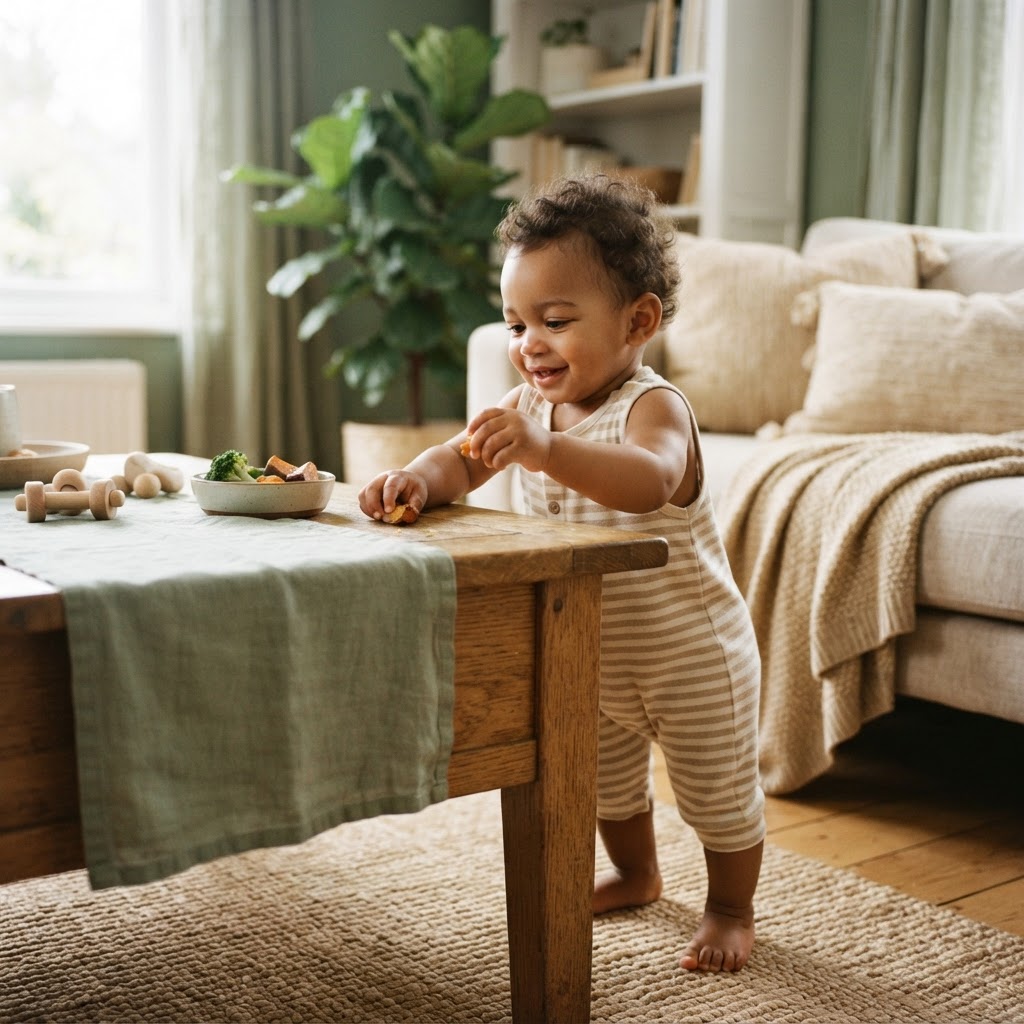
Whether your baby crawls, scoots, or goes straight to standing, movement is the headline. Many nine-month-olds pull up to stand at furniture and begin to cruise along it. Some take longer to crawl, and that is perfectly normal — babies reach movement milestones on their own timelines.
The pincer grasp usually emerges around now, letting your baby pick up small pieces of food between thumb and forefinger. Babbling becomes more varied and melodic, and your baby may respond to their name and simple words like 'no'.
- Pulling to stand: Hold low, sturdy furniture and stand with support — baby-proofing becomes important now.
- Pincer grasp: Picking up small objects with thumb and finger makes self-feeding and fine play much easier.
- Early gestures: Waving, pointing, and clapping often begin around this age and support communication.
Feeding & Nutrition
By nine months, solid food is a much bigger part of your baby's day. Most babies enjoy three meals plus snacks, sharing family foods that are mashed, chopped, or offered as finger food — always avoiding whole grapes, nuts, or other choking hazards, and keeping salt and added sugar low.
Breastmilk or formula remains important alongside solids. Responsive feeding continues to be the best guide: offer, watch for your baby's cues, and let them decide how much.
- Family foods: Texture progression matters — move beyond smooth purees toward mashed and soft lumps to support chewing skills.
- Self-feeding: Finger foods encourage independence and fine motor development, and let your baby explore texture and taste.
- Cup practice: Offering water in a sippy or open cup with meals supports the gradual move away from bottles.
Sleep at Nine Months
Daytime sleep usually settles into around two naps, with most babies still sleeping roughly 12–14 hours across 24. Predictability helps, and a consistent routine supports both naps and night sleep.
Developmental leaps, teething, and separation anxiety can all cause temporary sleep bumps. Consistency and comfort through these phases help your baby settle back to their usual patterns.
- Two naps: A morning and afternoon nap is the typical rhythm at this age, with wake windows of around 2.5–3 hours.
- Separation anxiety at night: A calm, predictable wind-down and a clear goodnight ritual help your baby feel secure.
Crying, Separation Anxiety & Soothing
Around nine months, separation and stranger anxiety often peak. Your baby has a strong, clear attachment to you and may become upset when you leave the room or when an unfamiliar face appears. This is a healthy sign of secure attachment, not a step backwards.
Short, calm separations with a consistent goodbyes-and-returns routine help your baby learn that you always come back. Comfort, predictability, and a favourite comfort object (where age-appropriate) all help.
- Say goodbye and return: Sneaking away can undermine trust; brief, calm goodbyes followed by a warm return teach your baby you will be back.
- Comfort object: A safe, small transitional item can help bridge your absence as separation anxiety ebbs and flows.
Conclusion
Nine months is a wonderful blend of movement, personality, and deepening connection. Celebrate the small victories, ride the clingy phases with patience, and keep offering a steady, loving base. Your baby is thriving — and so are you, even on the hard days.
Found this helpful?
Disclaimer
This article is general information only and is not medical advice, diagnosis, or treatment. Always seek the advice of your doctor or other qualified health provider with any questions about a medical condition or your baby's care.
Evidence base
- American Academy of Pediatrics (AAP) — developmental milestones & feeding
- World Health Organization (WHO) — child development standards
- NHS (UK) — your baby's development at 9 to 12 months
Next stage · 12 months
Your 12-Month-Old Baby: Milestones & What to Expect →