Feeding Guide
Introducing a Bottle to a Breastfed Baby: A Gentle, Practical Guide
By the MumNest Care Team

Whether you are heading back to work, planning a night out, or sharing feeds with a partner, introducing a bottle to a breastfed baby can feel like a delicate step. Done gently and at the right pace, most babies take to it well, and you can keep your breastfeeding relationship intact. This guide walks through timing, teat choice, paced feeding, and protecting your milk supply along the way.
Why Timing Matters
Most lactation guidance suggests waiting until breastfeeding is well established before offering a bottle, usually around three to four weeks. By then your baby has learned to latch and feed effectively, and your milk supply is settling into a rhythm. Introducing a bottle earlier can sometimes interfere with that learning, before your baby and your supply are ready.
At the same time, leaving it too late has its own pitfalls. Some babies who have only ever fed at the breast become reluctant to accept a bottle after around six to eight weeks. If you know you will need a bottle soon, somewhere in that three-to-six-week window is usually a good moment to start gently.
- Aim for 3–4 weeks if you can: This gives breastfeeding time to establish while your baby is still flexible about how they take milk.
- Don't panic if you start later: Many babies accept a bottle after six weeks; it just may take more patience and experimentation.
- If you must supplement earlier: Speak with your health professional — cup, syringe, or paced bottle feeding can be used under guidance in the early days.
Choosing the Right Bottle and Teat
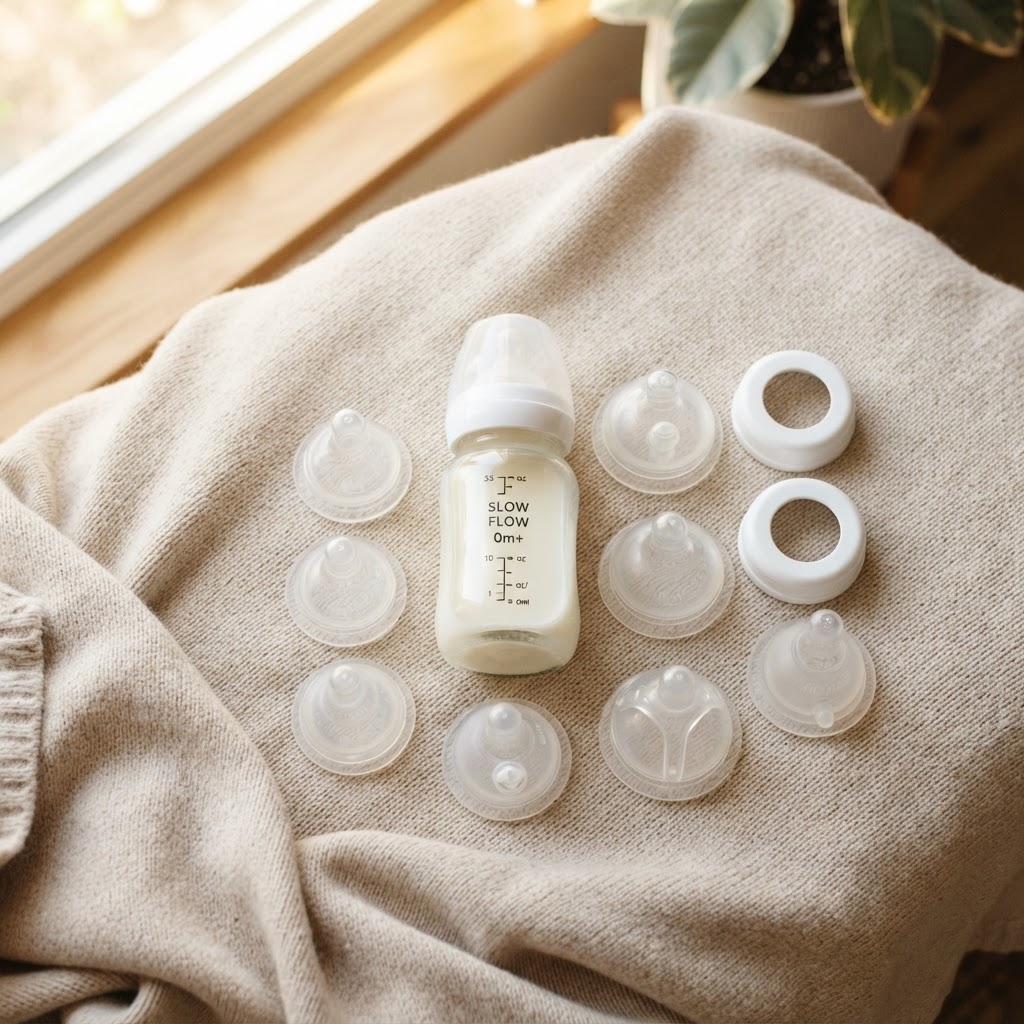
There is no single 'best' bottle for a breastfed baby — what works is highly individual. A few principles help narrow the choice: a slow-flow or newborn teat so milk does not pour out, a teat shape that lets your baby latch deeply rather than just gum the tip, and a bottle you find easy to clean and assemble.
A slow flow matters because breastfed babies are used to working for their milk and controlling the pace. A fast-flow teat can teach them to expect a quick, effortless feed, which is a common route to a breast refusal later.
- Start with the slowest flow teat: Newborn or size 0 teats let your baby suck actively rather than gulp a flood.
- Try a wide-neck, breast-like shape: A teat that encourages a wide, deep latch mirrors the breast and reduces confusion, though every baby has their own preference.
- Buy one or two to start: Bottles are trial and error. Begin with a single brand and teat before stocking up.
Paced Bottle Feeding: The Key to Protecting Breastfeeding
Paced bottle feeding is the single most important technique when you introduce a bottle to a breastfed baby. It lets your baby control the flow and stop when they are full, just as they do at the breast, rather than passively gulping a whole bottle. This protects both their breastfeeding skills and your supply.
Hold your baby fairly upright, keep the bottle horizontal so the teat is only half-filled with milk, and let them draw the milk by sucking. Pause every minute or so to burp and let them rest, and watch for fullness cues — turning away, slowing down, or pushing the teat out.
- Keep the bottle horizontal: Tipping it high forces milk into the teat and a fast flow. A level bottle means your baby sets the pace.
- Pause and burp: Break the feed every minute or two so your baby does not take more than they want.
- Follow their cues: Stop when your baby signals they are done, even if there is milk left. Never insist on finishing the bottle.
- Switch sides halfway: Holding your baby on your other arm mid-feed mirrors the breast and supports even development.
Who Offers the First Bottle
Some babies take a bottle more readily from someone other than the breastfeeding parent, because the smell and proximity of the breast can make them expect to nurse instead. Having a partner, grandparent, or friend offer the first one or two bottles can smooth the way.
That said, there is no hard rule. If it is just you, sit your baby so they are not in their usual feeding position, try a calm, slightly dim room, and stay relaxed — babies pick up on tension. A little expressed milk on the teat can help them accept it.
- Try another feeder first: A partner or carer offering the first bottle can reduce the 'but you are the breast' confusion.
- Change position and setting: If you are offering it, hold your baby differently from a breastfeed to signal that this is something new.
- Stay calm and unhurried: A relaxed, low-pressure attempt works better than a stressed one. Stop and try again later if it is not working.
How Much, How Often
Start small. A first bottle of 30–60 ml is usually plenty, and it is normal for a breastfed baby to take less from a bottle than you expect at first. Offer it once a day to begin with, and gradually build up as your baby gets used to it and as you need them to.
Milk volume at the breast is not measured in fixed ounces — your baby takes what they need across the day. A rough guide is around 150 ml per kilogram of body weight every 24 hours, split across feeds, but always follow your baby's cues and your health professional's guidance.
- Begin with a small amount: 30–60 ml is a gentle start. You can always offer more; you cannot take back an over-feed.
- Offer one bottle a day: Consistency helps more than frequency. One daily bottle keeps the skill fresh without replacing too many breastfeeds early on.
- Match the rhythm of the breastfeed it replaces: Offer the bottle at roughly the time your baby would normally nurse so the day's overall intake stays steady.
Protecting Your Milk Supply
Your milk supply runs on demand and supply — the more milk is removed, the more is made. Every breastfeed you replace with a bottle is a signal to your body to make a little less, unless you pump to keep the demand up.
If you are dropping a feed, pump or hand-express at that time to protect your supply, especially in the first months when supply is still establishing. Store that expressed milk for a future bottle feed, or for a caregiver to use when you are apart.
- Pump when a feed is missed: Removing milk at the usual time tells your body to keep making it. This is the single most effective way to protect supply.
- Build a small stash gradually: Pumping after a morning feed, when supply is often highest, can build a buffer without taking from your baby.
- Watch for supply dips: If your breasts feel less full or your baby seems hungrier at the breast, an extra pump session can help signal more production.
When It Doesn't Go to Plan
Some babies refuse a bottle at first, and some seem to prefer the bottle once they have it. Both are common and usually temporary, and a few adjustments make a big difference. The aim is a baby who is happy at the breast and happy with a bottle, moving between them as the day needs.
- Bottle refusal: Try a different teat shape or flow, a warmer teat, a different feeder, or offering when your baby is calm rather than ravenous. Skin-to-skin and a relaxed setting help.
- Breast refusal after bottles: Usually a sign the bottle flow is too fast or the feed too passive. Slow the flow, use paced feeding, and offer the breast when your baby is sleepy or calm.
- Get support early: If feeding feels stuck, a lactation consultant or your health professional can help you untangle it before it becomes a bigger issue.
Conclusion
Introducing a bottle to a breastfed baby does not have to mean choosing between breast and bottle. With the right timing, a slow-flow teat, paced feeding, and a little patience, most babies learn to move between the two with ease. Protect your supply by pumping when a feed is missed, follow your baby's cues, and reach out for support if the going gets sticky. With a gentle, consistent approach, a bottle can become one more flexible tool in your feeding day, not a threat to the breastfeeding relationship you have built.
Found this helpful?
Disclaimer
This article is general information only and is not medical advice, diagnosis, or treatment. Always seek the advice of your doctor, lactation consultant, or other qualified health provider with any questions about feeding your baby, your milk supply, or combining breast and bottle feeding.
Evidence base
- Australian Breastfeeding Association (ABA) — bottle feeding the breastfed baby
- American Academy of Pediatrics (AAP) — breastfeeding and bottle feeding guidance
- NHS (UK) — combining breast and bottle feeding
- Centers for Disease Control and Prevention (CDC) — paced bottle feeding
- International Lactation Consultant Association (ILCA) — feeding practice guidance