Feeding Guide
Making Formula Feeding Easier: Safe, Time-Saving Hacks
By the MumNest Care Team
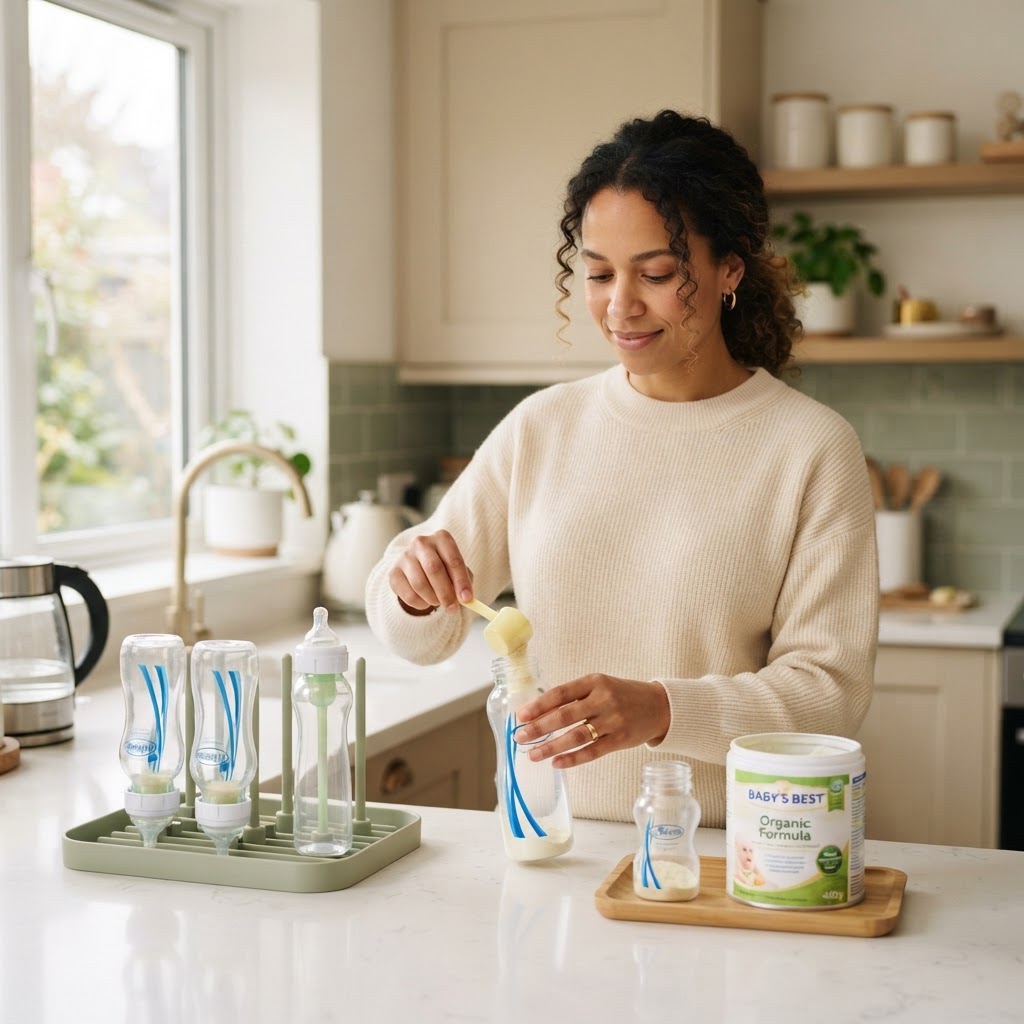
Formula feeding can feel like a round-the-clock production line of measuring, cooling, warming, and washing. With a little preparation grounded in safe food-handling guidance, you can take hours out of your week without cutting corners on safety. The ideas below follow authoritative guidance from the WHO, NHS, CDC, and Australian food standards on how powdered infant formula is safely made, stored, and warmed, so the shortcuts work with the science rather than against it.
Safety First: Why Preparation Method Matters
Powdered infant formula is not sterile. It can contain small numbers of bacteria such as Cronobacter or Salmonella that are harmless to most people but can cause serious illness in young babies, whose immune systems are still developing. The reason official guidance insists on making up formula with water at around 70°C is that this temperature kills those bacteria in the powder.
That single fact underpins almost every safe-preparation rule. Anything that cools the water below 70°C before it touches the powder, lets prepared formula sit warm, or reuses a feed that has already been warmed removes the safety margin. The good news is that once you understand the principle, there are plenty of convenient ways to prepare ahead that stay fully within the guidance.
- Boil fresh water, then cool to about 70°C: Boiled water left covered for around 30 minutes is roughly the right temperature. Always check the manufacturer's instructions, as some brands vary.
- Add water first, then powder: Measuring powder into already-poured water changes the concentration. Always add the powder to the correct volume of water.
- Cool and store or serve promptly: Once made, cool the feed quickly and either use it immediately or refrigerate it straight away.
The One-Batch Approach: Make Once, Pour as Needed
One of the most effective time-savers is to prepare a day's worth of formula in a single sterilised batch, then pour only the amount your baby needs into a smaller sterilised bottle for each feed. This cuts the boil, measure, and mix routine from eight or more times a day down to once, while keeping every feed within safe-storage rules.
The key is that the whole batch is made correctly with 70°C water, cooled rapidly, and refrigerated immediately. Only the serving portion is then warmed, and only once.
- Make the batch with 70°C water: Using a sterilised jug or a large sterilised bottle, prepare the total volume your baby will need for the next 24 hours, following the manufacturer's powder-to-water ratio exactly.
- Cool it quickly: Stand the container in cold water or under a running cold tap so it reaches fridge temperature fast rather than cooling slowly at room temperature.
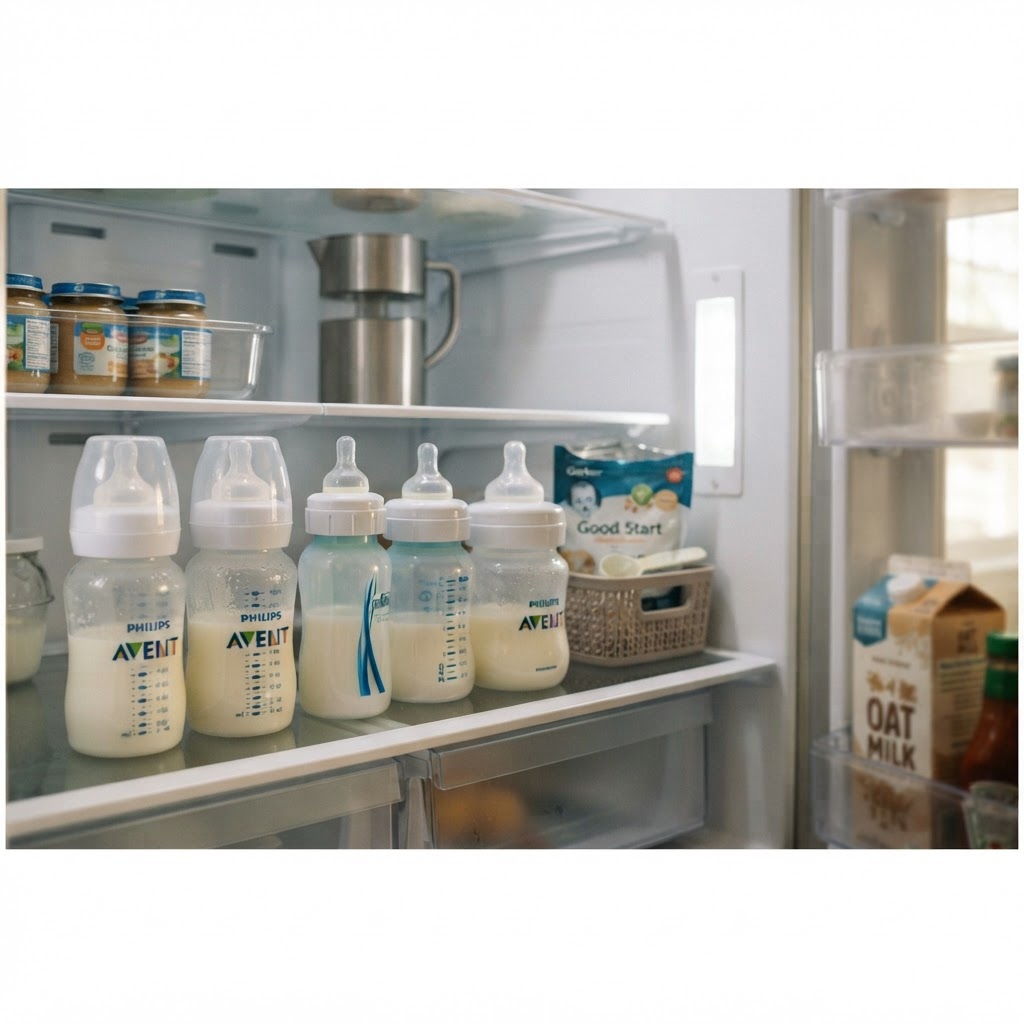
- Refrigerate at 4°C or below: Store the batch at the back of the fridge (not the door) and use it within 24 hours of making. Discard anything left after that.
- Pour only the serving amount: For each feed, pour the amount your baby takes into a sterilised bottle. This keeps the bulk of the formula cold and uncontaminated until it is needed.
- Warm the serving only: Warm just that one bottle in a jug of warm water, never in a microwave, and use it within one hour of warming.
Pre-Portioning Powder for Outings
Outings are smoother when the measuring is already done. Pre-portioning the right amount of powder into small sterile containers means a feed can be mixed on the spot with water from a freshly boiled thermos, without juggling a scoop and a tub in a café or a car.
Use a vacuum flask that has been pre-warmed with a splash of boiled water to keep water above 70°C for several hours, and mix the feed just before serving so it is freshly made and safe. Ready-to-feed cartons are an even simpler option for days when convenience matters more than cost.
- Sterile containers: Use clean, sterilised portion pots designed for formula, and keep them sealed until use.
- Thermos of 70°C water: Pre-heat the flask with boiled water, empty it, then fill with freshly boiled water that has cooled for around 30 minutes.
- Mix just before serving: Combine the pre-measured powder and hot water, cool to feeding temperature under cold running water, check on your wrist, and feed within one hour.
Warming Safely
How you warm a bottle matters for both safety and your baby's mouth. Microwaves heat unevenly and can create hot spots that scald, even when the bottle feels lukewarm to the touch, so they should never be used for baby bottles. A jug of warm water is quick, gentle, and safe.
Once a feed has been warmed, any leftover formula should be discarded within one hour, because bacteria from your baby's mouth multiply quickly in warm milk. Warming a feed twice is never safe.
- Jug of warm water: Stand the bottle in hot (not boiling) water for a few minutes and swirl gently to warm evenly.
- Test on your wrist: A few drops on the inside of your wrist should feel lukewarm, not hot.
- One-hour rule after warming: Use warmed formula within one hour, then discard any leftovers rather than putting them back in the fridge.
Night Feeds Without the Fumbling
Middle-of-the-night feeds are easier when the setup is ready before you go to bed. With everything pre-portioned beside the cot, a feed can be ready in the time it takes to warm a bottle, without switching on lights or hunting for a scoop.
Two safe approaches work well: pre-portioned powder plus a thermos of 70°C water to mix fresh, or a refrigerated bottle of batch-made formula with a small bottle warmer or jug of hot water beside the bed. Choose whichever fits your baby's age and your routine.
- Pre-portion powder bedside: Keep one portion of powder and a flask of 70°C water on a tray beside the bed, with a sterilised bottle ready.
- Pre-made refrigerated bottle: Alternatively, keep a batch-made bottle in a mini fridge or cool bag and warm only the serving you need.
- Keep it dark and calm: A dim nightlight and everything within arm's reach keeps night feeds low-stimulation so your baby settles back to sleep more easily.
Keeping Equipment Simple
The washing-up load of formula feeding is real, but a few habits keep it manageable. Sterilising in batches, choosing dishwasher-safe bottles, and keeping spares ready means you are never caught without a clean bottle at feed time.
Follow the manufacturer's guidance on sterilising for your baby's age — sterilising is recommended for babies under one in many guidance documents, though requirements ease as babies grow. Your health professional can advise on when to stop.
- Sterilise in batches: Run a steriliser cycle once a day with all the day's bottles and teats rather than item by item.
- Dishwasher-safe options: If your bottles are dishwasher-safe, a hot cycle reduces hand-washing; check the manufacturer's guidance for your specific bottles.
- Keep a spare set: A ready clean set means you are never waiting on a steriliser at a hungry moment.
Shortcuts to Avoid
Not every time-saver is a safe one. A few common shortcuts can undo the safety margin that correct preparation provides, so it is worth knowing where the line is.
- Making with warm, not hot, water: Water below 70°C does not kill bacteria in the powder. Always use freshly boiled water cooled to around 70°C, even when batch-making.
- Reheating a feed twice: Once formula has been warmed and offered, it should not be re-warmed. Discard leftovers within one hour.
- Keeping warmed formula in the fridge: Only refrigerate formula that has been made and cooled but never warmed. Warming then chilling is not safe.
- Adding extra powder for 'hungrier' feeds: Altering the ratio changes the concentration and can be harmful. Always follow the manufacturer's scoop-to-water ratio exactly.
- Storing prepared formula beyond 24 hours: Refrigerated made-up formula must be used within 24 hours, and ready-to-feed cartons within the time on the pack once opened.
Conclusion
Formula feeding does not have to mean an endless cycle of measuring and washing. By preparing a safe batch with 70°C water, cooling and refrigerating it promptly, and warming only the serving your baby needs, you can take real time out of your day while staying squarely within safe-preparation guidance. Pre-portion powder for outings, set up night feeds before bed, and keep the few shortcuts to avoid firmly in mind. With the safety rules understood, the time-savers become simple, reliable habits that make feeding your baby that little bit easier.
Found this helpful?
Disclaimer
This article is general information only and is not medical advice, diagnosis, or treatment. Always read and follow the preparation and storage instructions on your formula packaging, and seek the advice of your doctor or other qualified health provider with any questions about feeding your baby.
Evidence base
- World Health Organization (WHO) — safe preparation, storage and handling of powdered infant formula
- NHS (UK) — making up baby formula and sterilising bottles
- CDC (US) — infant formula preparation and storage
- Food Standards Australia New Zealand (FSANZ) — infant formula guidance
- National Health and Medical Research Council (NHMRC, Australia) — infant feeding guidelines